Estrogens - Use
Therapeutic uses
Estrogens, in particular estradiol, are used to compensate for their deficiency at different stages in the life of women: adolescence, adulthood and menopause. At the menopause they reduce the vasomotor disorders. After the menopause the decline of estrogen secretion is physiological but estrogen replacement therapy was hoped to have beneficial effects particularly by reducing progression of osteoporosis.
Estrogens alone, called unopposed estrogens, are rarely used for a long period because they increase the risk of endometrial cancer and breast cancer and of cardiovascular events. In fact estrogens are generally used in combination with progestins. The combination estrogen/progestin does not seem to increase the risk of endometrial cancer but does increase the risk of breast cancer and of cardiovascular events, myocardial infarction and stroke, venous thromboembolism.
Estradiol alone exists in oral and transdermal presentations. Conjugated estrogens (Premarin*) do not seem to have any advantage versus estradiol.
Estriol, hydroxyestrone and promestriene have an estrogenic activity lower than that of estradiol but a predominant vaginal action, in particular when they are applied topically. They are used for their vaginal trophic effect.
Ethinylestradiol is the synthetic estrogen commonly associated with a progestin in oral contraceptive tablets. Its elimination half-life is long, about 15 to 25 days. It has been used for blocking lactation.
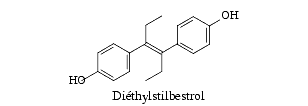
Synthetic estrogens such as diethylstilbestrol and fosfestrol, are used only for the treatment of prostate cancer with or without metastases. Diehylstilbestrol is the drug which must always be avoided in pregnant women. Fosfestrol is a molecule of diethylstilbestrol whose OH groups are esterified by phosphoric acid. In the prostate, fosfestrol is hydrolyzed by acid phosphatases and converted to diethylstilbestrol.
Adverse effects
Estrogens can give general disorders: headache, mammary tension, irritability, intermenstrual bleeding etc.
The administration of an estrogen is regarded as likely to increase the frequency of thrombotic events, especially when the treated people present predisposing factors (hyperlipidemia, tobacco use…), which led to the drawing up for each one of them of a long list of precautions of employment. It is admitted however that endogenous estrogens, before the menopause, protect women against cardiovascular accidents. This discordance can be explained by differences according to the estrogen used, its dosage and its route of administration:
- estradiol, natural estrogen, at the doses used, could be better tolerated than ethinylestradiol, synthetic estrogen, used in contraceptive combinations, especially when it is used in large doses, 50 micrograms per tablet for example.
- the route of administration could play a part: intake of estrogens by oral route induces, during its first hepatic passage, a strong stimulation of the synthesis of angiotensinogen, atherogenic lipids. The intake of estradiol by transdermal route which avoids this first hepatic passage, could be better tolerated. The increased risk of tromboembolism could be especially linked to the intake by oral route of a synthetic estrogen in large doses.
Estrogens, and more particularly artificial estrogens should not be given to pregnant women.
|


