Estrogens - Metabolism
Biosynthesis
Estrogen biosynthesis is carried out especially in the ovaries but other organs, such as testis, adipose tissue, hypothalamus, brain, can also synthesize them.
The estrogens, like other endogenous steroids, derive from cholesterol and pregnenolone which through many steps are converted into androstenedione and testosterone, direct precursors of the estrogens. The more characteristic enzymatic reaction is the conversion of testosterone and androstenedione into estradiol and estrone, respectively, under the influence of the aromatase enzyme, constituted of a P-450 cytochrome and a cytochrome reductase using NADPH as reducer. This enzyme is present in ovaries but also in liver, muscles, adipose tissues and certain neoplastic tissues such as mammary carcinomas.
Before the menopause estrogens result primarily from ovarian secretion, after the menopause from the conversion of adrenal androgens by the aromatase of peripheral tissues. This explains why a bilateral ovariectomy does not completely remove the formation of estrogens.
During pregnancy, a large amount of estrogens are synthesized by the placenta and excreted in urine.
Estrogens are present also in men; they are secreted in a physiological way by the testis and adrenal cortex and possibly formed in adipose tissues.
Distribution
- In blood:
In women, the concentration of estradiol varies during the menstrual cycle with a preovulatory peak and a postovulatory peak. In blood, estradiol and testosterone are bound to a specific globulin and to albumin.
The secretion of estrogens increases at puberty and falls considerably after menopause.
- In tissues:
The unbound form penetrates passively into the cell where it binds to a protein receptor bound to DNA. This receptor is present primarily in target tissues genital apparatus, hypothalamus, pituitary gland, breast,.
Catabolism
The catabolism of the natural estrogens is carried out primarily in the liver with elimination of metabolites into bile; but the sulfate conjugated estrogens are eliminated mainly in urine.
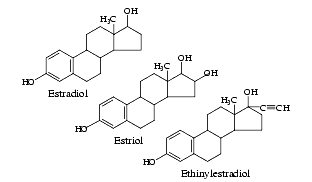
Ethinylestradiol is an orally active synthetic estrogen, frequently used because it is little inactivated by the liver and has a very long plasma half-life.
Mestranol is a synthetic estrogen rapidly metabolised in the body into ethinylestradiol.
|


