Pyrimidine nucleotides
Pyrimidine bases are cytosine, thymine and uracil. Their biosynthesis is carried out from glutamine which is converted into carbamyl-aspartate, carbamyl-phosphate and, after several steps, into uridine-monophosphate, UMP, uridine-triphosphate, UTP, and deoxycytidine-triphosphate, dCTP and deoxythymidine-triphosphate, dTTP.
The folates under reduced form by dihydrofolate reductase (DHFR) are necessary for the conversion of deoxyuridine monophosphate (dUMP) into deoxythymidine monophosphate (dTMP). This step is catalyzed by thymidylate synthase (TS) and consists of a transfer of a methyl group given by methyl-tetrahydrofolate. The dTMP is after converted into diphosphate, dTDP, and triphosphate, dTTP, for forming DNA, whereas uridylate is used for RNA.
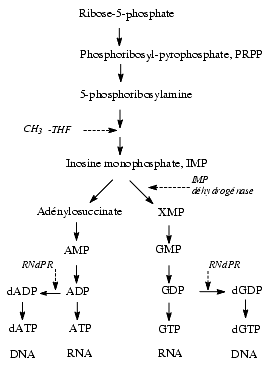
The ribonucleotide reductase is the enzyme responsible on the conversion of ribonucleotides into deoxy-nucleotides.
General scheme of pyrimidine nucleotide biosynthesis
U = uridine , C = cytidine, T = thymidine, d = deoxy, TS = thymiylate synthase, BNdPR = ribonucleotide reductase, DP = diphosphate, PP = triphosphate.
The main functions of DNA and RNA are DNA replication catalyzed by the DNA polymerase, transcription of DNA into RNA for protein synthesis catalyzed by DNA-dependant RNA polymerase and DNA formation from RNA catalyzed by the reverse transcriptase of certain viruses.
|


