Angiotensin concerting enzyme, ACE, inhibitors
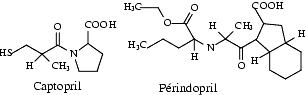
Angiotensin converting enzyme inhibitors, ACE inhibitors, inhibit the conversion of angiotensin I into angiotensin II and the degradation of bradykinin. The first ACE inhibitor was captopril. Since, many others ACE inhibitors were discovered and marketed: enalapril, lisinopril, périndopril, quinapril, ramipril, benazepril, cilazapril, trandolapril, fosinopril and moexipril.
Consequences of the inhibition of ACE
After administration of an ACE inhibitor:
- effects of angiotensin I injection, vasoconstriction and aldosterone secretion, are decreased or suppressed
- effects of angiotensin II injection, vasoconstriction and aldosterone secretion, are not modified
- effects of bradykinin, which is no longer inactivated by ACE, are increased. The increase of bradykinin concentration induces in its turn formation of nitric oxide and prostaglandin PGI2.
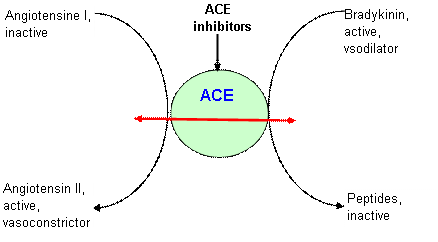
Consequences of the inhibition of angiotensin converting enzyme
Effects
ACE inhibitors elicit:
- decrease of systolic and diastolic arterial pressure, in normal subjects and in hypertensive patients, even if their plasma angiotensin level is normal. Moreover, they increase renal blood flow rate.
- decrease of aldosterone secretion which does not disappear however, because it also depends on ACTH secretion and potassium concentration.
- increase in sodium excretion by decrease of aldosterone secretion.
- decrease of development of atherosclerotic lesions and cardiac hypertrophy, by mechanisms which remain to be specified.
Pharmacokinetic features
The chemical structure of active ACE inhibitors has one (captopril) or two (all the others) R-COOH groups. To improve their digestive absorption, one acid group R-COOH in most of ACE inhibitors is esterified to give R-CO-O-C2H5. This esterification facilitates digestive absorption and the ester bond is then hydrolyzed in the body, releasing the active acid form. These esters are prodrugs.
Therapeutic uses
ACE inhibitors have shown efficacy in the treatment of many diseases.
- arterial hypertension
- congestive heart failure where, by decrease of peripheral resistances, they facilitate heart work and, by direct effects, are opposed to the development cardiac hypertrophy. Improvement of hemodynamic conditions in patients with heart failure causes a fall of catecholamine levels in plasma.
- myocardial infarction.
- chronic renal failure and diabetic nephropathies.
Many clinical studies have demonstrated that ACE inhibitors reduce pathological manifestations and reduce all cause mortality.
The ratio beneficial effects/adverse effects of ACE inhibitors is quite similar and there is no clear argument in favour of one of them. As for any antihypertensive drug, it is necessary to start the treatment with a low dosage which is gradually increased according to results.
Available preparations
Captopril ; enalapril, lisinopril ; périndopril ; quinapril ; ramipril ; benazepril ; cilazapril ; trandolapril ; fosinopril ; moexipril ; imidapril ; zofenopril ;
Many ACE inhibitors are combined in the same preparation with a diuretic, often hydrochlorothiazide.
Adverse effects
The main adverse effects of ACE inhibitors are as follows:
- Hypotension, often consequence of an excessive dose.
- Hyperkalemia by reduction of aldosterone secretion, particularly observed in patients with unsuited potassium supplementation or with renal impairment.
- Renal impairment which can be observed in patients with bilateral renal artery stenosis, by suppression of the vasoconstriction of the efferent glomerular arteriole, inducing a fall of glomerular filtration. Renal impairment is also possible in patients treated by diuretics or who are salt-depleted.
- Irritative cough, without expectoration, can be observed in patients treated by an ACE inhibitor. It is supposed that bradykinin and perhaps certain prostaglandins are responsible of this frequent side effect.
- Hypersensivity reactions: urticaria, skin rash, angioedema which can be severe especially when swelling affects the tongue, glottis or larynx, with possible airway obstruction necessitating epinephrine administration.
- Dysgueusia or agueusia (alteration or loss of taste), especially with captopril when it was used in large doses.
- Use of ACE inhibitors during pregnancy is imperatively disadvised: during the first trimester because of a low teratogenic risk but especially during the second and third trimesters because of the risk of severe renal impairment in the child.
|


