Vitamine D - Effects
Vitamin D acts on calcium and phosphorus metabolism but also on cellular differentiation and proliferation.
Effects on calcium and phosphorus metabolism
Calcitriol increases calcemia and phosphatemia, primarily by increasing the digestive absorption of calcium and phosphate, and incidentally by increasing their mobilization from bone and by reducing their renal excretion.
Vitamin D exerts correctly its role only if the diet supplies a sufficient amount of calcium and phosphate.
Calcitriol acts at the nuclear level like steroid and thyroid hormones. It modifies the protein synthesis of transporters and enzymes implicated in the metabolism of calcium and phosphate. It induces in particular the synthesis of proteins called calbindines which increase the digestive absorption of calcium by increasing its transfer through the cytosol, from the apical pole to the basal pole. The extrusion of calcium from the basal pole of the epithelial cell is done by a Ca/ATP dependant pump, an exchanger Na+/Ca2+ and by exocytosis.
Calcitriol induces the synthesis by the intestinal cells of alkaline phosphatases which hydrolyze non-absorbable polyphosphates in phosphate absorbable by the digestive tract.
Calcitriol inhibits the secretion of parathormone, indirectly through the increase of calcemia and directly by inhibiting the expression of the gene implicated in parathormone synthesis.
The deficiency in vitamin D decreases the digestive absorption of calcium and phosphate whose concentrations in plasma, especially that of calcium, tends to be lowered, which induces a hypersecretion of PTH which mobilizes bone calcium to maintain a subnormal calcemia. This deficiency thus induces a bone demineralization with symptoms corresponding to rickets or osteomalacia. The body, in absence of vitamin D and calcium uses bone to maintain a normal calcemia.
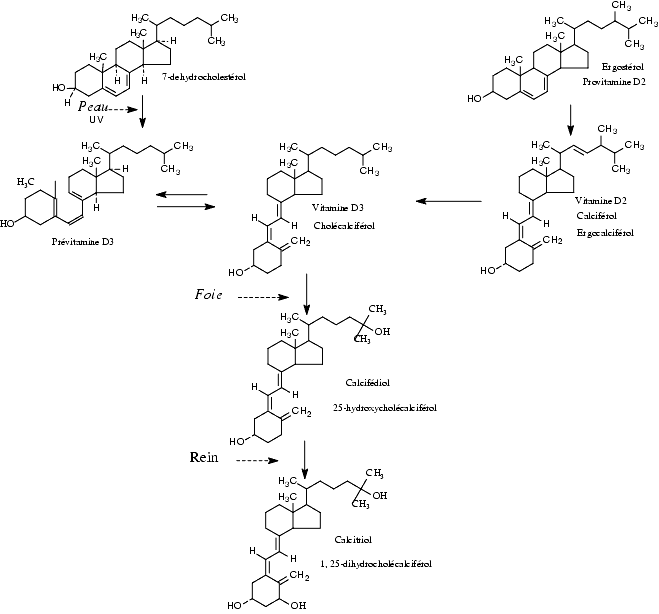
Vitamine D Métabolism
Other effects
Calcitriol is involved in the maturation and differentiation of mononuclear cells and keratinocytes and in the production of lymphokine. It could inhibit certain cellular proliferations.
The calcipotriol, derived from calcitriol, has relatively few effects of vitamin D type on calcium metabolism but it inhibits the proliferation of keratinocytes and induces their differentiation. It is used in local treatment of psoriasis.
Vitamin D increases the synthesis of the nerve growth Factor
Signs of vitamin D deficiency are, according to age, retardation of fontanel ossification, costal nodosities, widening of epiphyses, osteopenia, bone deformations, hypocalcemia and low level of vitamine D in plasma.
|


